Commercial Water Damage Restoration in Wake Forest, NC
A water loss in a storefront, office or church costs more every day the doors stay closed. The commercial restoration crew extracts, sets drying equipment around business hours where possible and keeps the documentation the property owner and insurer need.
(888) 578-4720Get the business drying started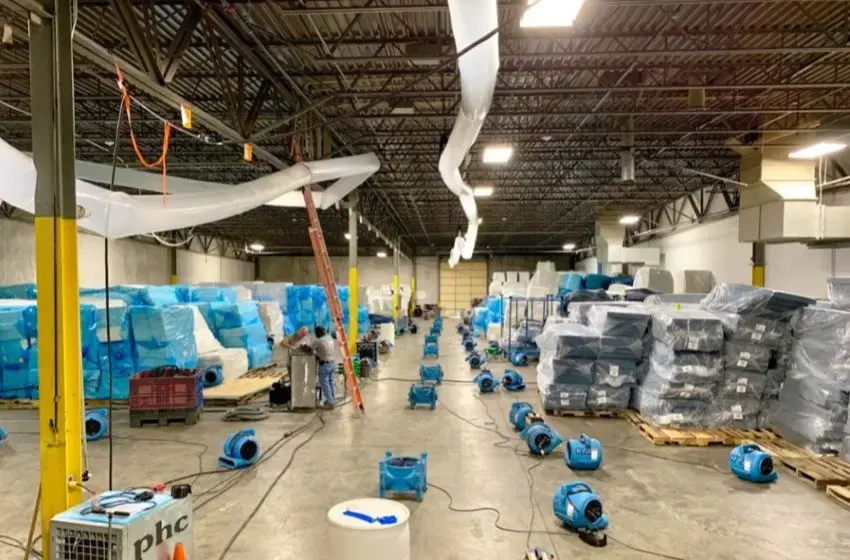
First steps for commercial water damage restoration in Wake Forest
Stop the source
Close the building main or the sprinkler control valve if it is safe and permitted.
Protect records and stock
Move paper, electronics and inventory off the floor and out of the wet area.
Notify tenants and staff
Keep people away from wet floors and electrical equipment.
Call for a commercial crew
Call (888) 578-4720 to start extraction and plan the drying.
How commercial water damage restoration is handled to the S500 standard
Rapid local response
The response team runs emergency calls around the clock across Wake Forest, so the extraction starts while the water is still on the surface.
IICRC S500 drying standard
Crews follow the industry drying standard: moisture mapping first, then extraction, air movers and LGR dehumidifiers sized to the room.
Claim-ready documentation
The mitigation team records a moisture map, daily readings and timestamped photos, the file an adjuster reads.
Wake Forest water experts
Vented crawl spaces on red clay, new PEX plumbing and storm rain off the Neuse basin shape how the drying team plans each job.
What does commercial water damage restoration cost in Wake Forest, NC?
In Wake Forest, NC, commercial water damage restoration typically runs $3,000 to $25,000 or more, depending on the square footage, the water category, the materials involved, the number of tenant spaces and how much of the work must run after hours.
Single suite or storefront
$3,000 to $8,000- Extraction
- Drying equipment
- Daily logs
Multiple suites
$8,000 to $18,000- Shared-wall mapping
- Large LGR units
- Scheduled work
Large or contaminated
$18,000 to $25,000+- Category 3 protocol
- Extensive removal
- Extended drying
Every loss is different. For a planning range, try the water damage cost calculator.
The commercial water damage restoration process, step by step
- 1
Priorities walk-through
Owner and project lead set which spaces reopen first.
- 2
Large-scale extraction
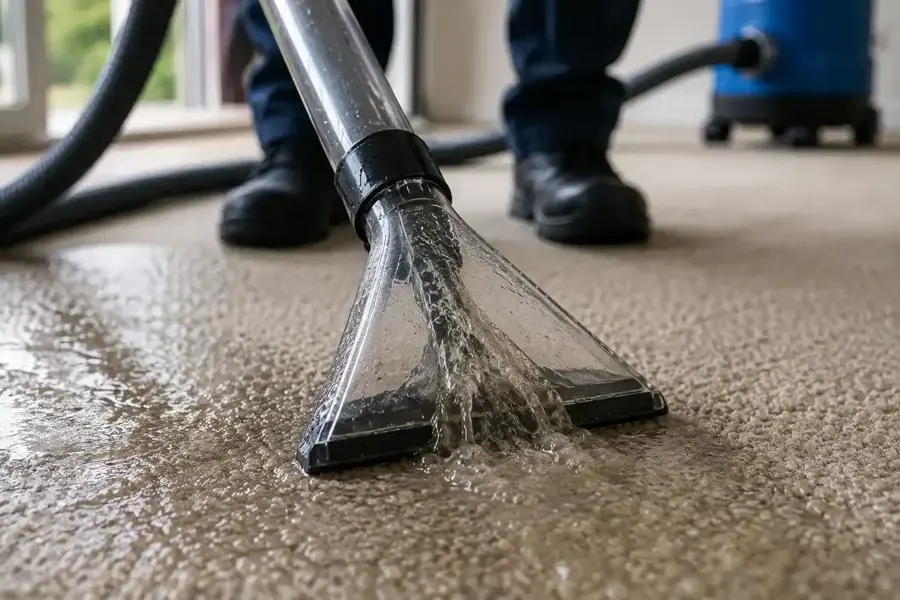
Truck-mounted units clear water from carpet tile, concrete and hard floors.
- 3
Scheduled drying
Large LGR units and air movers run, sequenced around business hours.
- 4
Unit-by-unit records
Readings, photos and logs are kept by room and tenant space.
Wake Forest's downtown along White Street is full of older brick storefronts, and the town's growth has added office parks, medical buildings and large churches along Capital Boulevard and the Wake Forest bypass. Each type of building takes on water in its own way.
Common commercial water losses
- Fire sprinkler lines that freeze or are struck, releasing a lot of water fast.
- Flat or low-slope roofs that pond and leak during storms.
- Restroom and break room supply lines in shared walls between tenants.
- Storm water entering at grade on older downtown buildings.
- HVAC condensate lines overflowing in humid weather.
How a commercial dry-out is run
The project lead walks the property with the owner or manager to set priorities: which spaces must reopen first, where equipment can run overnight and which areas hold records or inventory. The extraction crew pulls water with truck-mounted units, and the drying team sets large LGR dehumidifiers and air movers sized to the space. In multi-tenant buildings, moisture mapping covers the shared walls so the loss is traced into neighboring units. Where possible, noisy equipment runs after hours and the work is sequenced so part of the business can stay open.
Documentation for owners, tenants and insurers
Commercial claims often involve a building owner, one or more tenants and several policies. The restoration team keeps a single file: timestamped photos, the moisture map by room and unit, daily psychrometric logs, and the category and class of the loss. The OSHA flood pages cover worker safety during cleanup, and ReadyNC posts storm preparedness information for North Carolina businesses. See structural drying for how the drying goal is measured.
Commercial Water Damage Restoration across Wake Forest and nearby towns
The restoration team covers Wake Forest ZIP codes 27587 and 27588, from the historic district to Heritage, Holding Village and Traditions, and out to Rolesville, Youngsville, Franklinton and North Raleigh.
See every neighborhood and ZIP coveredServices related to commercial water damage restoration in Wake Forest
Commercial Water Damage Restoration questions, answered
Can a business stay open during drying?
Often, at least in part. Work can be sequenced by area, and noisy equipment can run after hours, so unaffected spaces keep operating.
How is water traced between tenant spaces?
Moisture mapping follows the water through shared walls and floors, so every affected unit is identified and dried.
What happens to wet carpet tile?
Clean-water carpet tile can often be extracted and dried; tiles touched by contaminated water are removed and replaced.
Who coordinates with the insurance carriers?
The property owner and tenants work with their carriers. The restoration team provides the photos, moisture maps and logs each carrier needs.
Are fire sprinkler leaks handled?
Yes. A sprinkler release puts a lot of clean water down quickly; extraction and drying follow the same S500 approach at a larger scale.
How long does a commercial dry-out take?
Most commercial losses dry in three to seven days, depending on the size of the space and the materials.
Commercial Water Damage Restoration in Wake Forest? Call now.
The restoration team extracts the water, dries the structure to the IICRC S500 standard and documents every step for the insurance claim.